

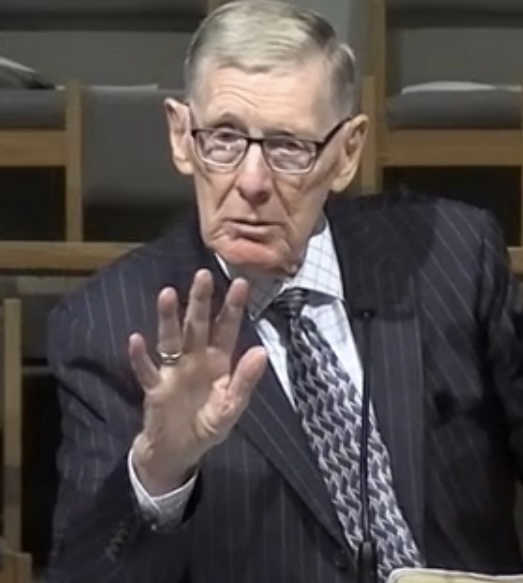
Pastor Jerry Rockwell
BUILDING ON YOUR MOST HOLY FAITH
Jude 20-25
Introduction: Apostasy has a way of derailing a Christian in their walk with God and being the witness, the Bible indicates we are to be. There is every type of false teaching, even those who take tenants of scripture and make them sound biblical yet there is one or two little pieces that will not fit doctrinally. The cults are masters of this. They take biblical truth and surround some small matter of heresy with what God has said. That gives them some form of credibility. That is why a Christian believer must know the Bible in a way they know when they encounter false teachings. This section of Jude gives several methods to incorporate in your walk with God that will keep you on the straight and narrow. These are not earth-shaking nor deep biblical truths. These are simple, straightforward admonitions to remind us of the ways we can incorporate in our walk with the Lord that will keep us close to Him and the truth of the Bible. They are simple yet significant to keep us in tune with God’s truth, reassuring us that our faith journey is not as complex as it may seem.
- BUILDING UP YOURSELVES, Jude 20. In the years of my ministry as a pastor, it has been my observation that there is a way of gauging who are the serious Christians and who are not. Church Growth experts will tell us that you can gauge a Christian’s Walk with the Lord by the number of times they are engaged in the services and ministry of the church. Interestingly, attendance can be measured by any church. No matter how large the Sunday AM service the Sunday PM attendance is usually close to half of the number who attended the morning service. The Wednesday attendance will usually be half of the number that attended on Sunday PM. Then, when “visitation” is scheduled, you will find maybe 2% of the number who attended the Wednesday service. For instance, if the attendance is 400 on Sunday AM, the attendance will generally be 200 in the Sunday PM service. Then, you can expect to see approximately 100 people on the Wednesday service. I know you cannot gauge a believer’s spiritual growth by the number of times they attend church. Yet, what are they doing when they cannot come to a church service? This may be a bit boring to some, but the believers of the church need to get serious about their walk with the Lord. There have been times as a pastor that I wish God had installed a “bung hole” in the top of every person’s head. Then we could unscrew the “bung” and pour in some spiritual growth, or spirit filling, or an “antiseptic” of the “pure words of God” (see: Psalm 12:6; 119:40; Prov. 30:5) to heal the malady that keeps believers from growing and doing the work of the Lord. Why do you think Jude had to write to “But ye, beloved, building up yourselves in your most holy faith, praying in the Holy Ghost?” Some believers in Jude’s day are like believers in Orlando on August 4, 2024. The 21st-century believer has to be diligent and possess a desire to know what God wants of His children. How are you doing in “building up” yourself in “your most holy faith?” Peter admonished believers in 2 Peter 3:18 (KJV), “But grow in grace, and in the knowledge of our Lord and Saviour Jesus Christ. To him be glory both now and for ever. Amen.” If we had a child who was not growing normally, our first action would be to consult a physician to find out why this was happening. HOW ARE YOU DOING IN YOUR SPIRITUAL GROWTH? Do you need to see the “Great Physician?” How do we do this? John Phillips has an excellent outline of this section of Jude, and I don’t usually do this, but I want to borrow his points to give you instructions on this passage of scripture. There are four: The Outward Look, the Upward Look, the Inward Look, and the Onward Look. Let’s get started.
- THE OUTWARD LOOK, “Building. . .on your most holy faith,” Jude 20. Jesus gave his disciples an admonition in Luke 17:1-4 about “offences” and that “. . .if a brother trespass against thee, rebuke him; and if he repent, forgive him. And if he trespass against thee seven times in a day, and seven times in a day turn to thee saying, I repent; thou shalt forgive him” (vss. 3-4). The disciples respond in an interesting way. The next verse indicates that their response is interesting in verse 5, “And the apostles said unto the Lord, Increase our faith.” Jesus responded to them in Luke 17:6 (KJV), “And the Lord said, If ye had faith as a grain of mustard seed, ye might say unto this sycamine tree, Be thou plucked up by the root, and be thou planted in the sea; and it should obey you.” The disciples thought they did not have enough faith to forgive someone who trespassed against them even seven times in one day. Jesus suggests that it takes a lot less faith than you think. The mustard seed is one of the smallest seeds in the world, some say the smallest. How would you measure your faith? You say I don’t have much; how much does it take? Do you remember Romans 10:17 (KJV), “So then faith cometh by hearing, and hearing by the word of God.” [Emphasis added.] Jesus was preaching in a house in Mark 2, and some men had a friend who was “sick of the palsy” (Mark 2:4), these men broke through the roof to get their friend to Jesus since so many people blocked the doors. It says in Mark 2:5 (KJV), “When Jesus saw their faith, he said unto the sick of the palsy, Son, thy sins be forgiven thee.” [Emphasis added.] Note it does not say when Jesus “saw” the faith of the man with the palsy, but the men (plural) who brought him their faith. Do you have that kind of faith? Paul and Barnabas returned to Antioch from their first missionary journey we are told in Acts 14:27 (KJV), “And when they were come, and had gathered the church together, they rehearsed all that God had done with them, and how he [God] had opened the door of faith unto the Gentiles.” We have a mandate to do the same so other Gentiles just like you and me can believe and be saved. The four men who brought the man with palsy to Jesus believed Jesus could help their friend. Do you have compassion for the lost? Do you want to see people come to the Saviour? Do you believe that God has opened a door to the Gentiles? How did you come to salvation in Christ? The door was opened to you. To continue as a believer, you must be grounded in the Word, which makes you doctrinally strong. A Christian must be willing to study the Bible and learn to apply it to their life. Paul told the Ephesian elders in Acts 20:32 (KJV), “And now, brethren, I commend you to God, and to the word of his grace, which is able to build you up, and to give you an inheritance among all them which are sanctified.” Are you being built up in the things of the Lord and His word? The Bible word for this is “edification.” Peter talked about spiritual growth and said in 1 Peter 2:2 (KJV), “As newborn babes, desire the sincere milk of the word, that ye may grow thereby.” You must “grow” in your spiritual life. This is the only way you will be able to identify false doctrine. The Apostle Paul was encouraging the believers at Ephesus 6:10-11, “. . .be strong in the Lord, and the power of his might. 11 Put on the whole armour of God. . .” How strong are you in the Lord today? It does not apply to your age physically but “spiritually.” A soldier must go through intensive training to be an effective soldier. It is no different with a believer.
- THE UPWARD LOOK, “Praying in the Holy Ghost,” Jude 20. John Phillips said, “Watching sights the enemy; praying fights the enemy.” How would you measure your prayer life? The Bible says in James 5:16 (KJV), “Confess your faults one to another, and pray one for another, that ye may be healed. The effectual fervent prayer of a righteous man availeth much.” The word “availeth” means “to be strong or able, to be of force or authority.” The current English dictionary avoids the word’s positive meaning and only gives its “negative” meaning. It says, “to no avail,” or in other words, it failed. The Bible tells us of the time Peter was held in prison by Herod and it says in Acts 12:5 (KJV), “Peter therefore was kept in prison: but prayer was made without ceasing of the church unto God for him.” The people were praying for Peter, and while they prayed, the “angel of the Lord” came to him while sleeping between two soldiers and “bound with two chains” (Acts 12:6); probably, each one was attached to one of the two guards. There were even “keepers before the door.” The text tells us that “a light shined in the prison: and he [the angel] smote Peter on the side, and raised him up, saying, Arise up quickly. And his chains fell off from his hands” (Acts 12:7). Have you ever wondered why the two guards and the one at the door did not hear anything and awoke? When the angels got Peter to the door of the house where the people were praying, and Peter knocked at the gate, the young damsel, Rhoda, came, recognized the voice of Peter and recognized him, then, without opening the gate, she ran inside and told the people praying that Peter was standing outside. The classic “unbeliever in prayer” statement in Acts 12:14 and their response is classic. They told Rhoda, “Thou art mad” (Acts 12:15), not believing that their prayer had been answered. Have you ever wondered what it means in Ephesians 6:18 (KJV), “Praying always with all prayer and supplication in the Spirit, and watching thereunto with all perseverance and supplication for all saints.” How is your prayer life today? Do you have that kind of faith? Jude said, “building on your most holy faith.” When you were saved the Holy Spirit moved into your life and “dwells” in you (Rom. 8:9; 1 Cor. 3:16; 6:19)? It has been said that the average Christian has no idea of the work of the Holy Spirit in their life.
- THE INWARD LOOK, Keep yourselves in the love of God, Jude 21. This point is best illustrated by scripture. Let’s look at some passages that address the “inward look.” The Bible says, Psalm 94:11 (KJV), “The Lord knoweth the thoughts of man, that they are vanity.” Another: Isaiah 55:8 (KJV), “For my thoughts are not your thoughts, neither are your ways my ways, saith the Lord.” There is time when God evaluates the thoughts of man. Look at Jeremiah 6:19 (KJV) Hear, O earth: behold, I will bring evil upon this people, even the fruit of their thoughts, because they have not hearkened unto my words, nor to my law, but rejected it. King David made a plea to God that fits here in Psalm 139:23 (KJV), “Search me, O God, and know my heart: try me, and know my thoughts. Another in Psalm 119:113 (KJV), “I hate vain thoughts: but thy law do I love.” Jeremiah recorded God’s consideration of Israel. He said, Jeremiah 4:14 (KJV), “O Jerusalem, wash thine heart from wickedness, that thou mayest be saved. How long shall thy vain thoughts lodge within thee? There is an aspect about our thoughts that we don’t often consider. We are told in Matthew 9:4 (KJV), “And Jesus knowing their thoughts said, Wherefore think ye evil in your hearts?” (cf. Luke 5:22; 6:8; 11:17) How often do you remind yourself that God knows your thoughts? Sometimes is should be a bit scary if we consider Mark 7:21-23 (KJV), For from within, out of the heart of men, proceed evil thoughts, adulteries, fornications, murders, 22 Thefts, covetousness, wickedness, deceit, lasciviousness, an evil eye, blasphemy, pride, foolishness: 23 All these evil things come from within, and defile the man.” Most believers fail to consider that the “inner” part is the source of evil thoughts and actions. What is the remedy for this? We need to consider what is taking place in our inner life and make some changes like, “Proverbs 16:3 (KJV), “Commit thy works unto the Lord, and thy thoughts shall be established.” [Now we can ease off a bit.]
- THE ONWARD LOOK, “Looking for the mercy of our Lord Jesus Christ unto eternal life,” Jude 21. This has the focus of the future. There are several ways we could apply this phrase. “Looking” has the idea of “anticipation.” As Christians we should be reminded of 1 Thessalonians 2:19 (KJV), “For what is our hope, or joy, or crown of rejoicing? Are not even ye in the presence of our Lord Jesus Christ at his coming?
- LOOKING FOR THE LORD’S RETURN. When me and my siblings were growing up, the afternoon after school we would begin to anticipate the coming of our dad from work. It was always a treat to greet him and anticipate a reward for being able to carry his “lunch pail” to the house. He usually left a small morsel of his lunch in the pail, and we would look into it with anticipation. We had a black tongue chow who was the guardian of the external part of our house. He could hear the car Dad drove before we could see it. He would run down the street and then escort the car and my dad to the house. As a child, that was a highlight of our day; we loved that event.
There is an application we could make for the “return” of our Lord Jesus Christ. God gave the Nation of Israel some signs that the Messiah would come and how that could be identified. One is seen in Malachi 3:1 (KJV), “Behold, I will send my messenger, and he shall prepare the way before me: and the Lord, whom ye seek, shall suddenly come to his temple, even the messenger of the covenant, whom ye delight in: behold, he shall come, saith the LORD of hosts.” The nation missed this coming. There were many signs given. Will we miss the 2nd Coming of Jesus Christ? In light of what we have studied earlier about “thoughts” we should consider what is said in 1 Thessalonians 5:23 (KJV), “And the very God of peace sanctify you wholly; and I pray God your whole spirit and soul and body be preserved blameless unto the coming of our Lord Jesus Christ.” There is a passage we should always keep in mind. 1 Thessalonians 4:15-18 (KJV), “15 For this we say unto you by the word of the Lord, that we which are alive and remain unto the coming of the Lord shall not prevent them which are asleep. 16 For the Lord himself shall descend from heaven with a shout, with the voice of the archangel, and with the trump of God: and the dead in Christ shall rise first: 17 Then we which are alive and remain shall be caught up together with them in the clouds, to meet the Lord in the air: and so shall we ever be with the Lord. 18 Wherefore comfort one another with these words.”
- LOOKING FOR THE LORD’S VICTORY OVER EVIL. This point will be a bit of a review for you who went through Revelation in our last study in Sunday School. Look at Revelation 19:11-16 (KJV), “11 And I saw heaven opened, and behold a white horse; and he that sat upon him was called Faithful and True, and in righteousness he doth judge and make war. 12 His eyes were as a flame of fire, and on his head were many crowns; and he had a name written, that no man knew, but he himself. 13 And he was clothed with a vesture dipped in blood: and his name is called The Word of God. 14 And the armies which were in heaven followed him upon white horses, clothed in fine linen, white and clean. 15 And out of his mouth goeth a sharp sword, that with it he should smite the nations: and he shall rule them with a rod of iron: and he treadeth the winepress of the fierceness and wrath of Almighty God. 16 And he hath on his vesture and on his thigh a name written, KING OF KINGS, AND LORD OF LORDS.”
- DEVELOPING DIFFERENCE, HAVING COMPASSION, Jude 22.
- DELIVERANCE FROM JUDGMENT, “Pulling Them Out Of The Fire,” Jude 23.
- DETESTING THE GARMENT SPOTTED BY THE FLESH, Jude 23.
BENEDICTION, Jude 24-25.
Dr. Terry Basham, Sr.
From The Baptist Watchman, April 2016
God’s people in this world and these people are gathered into groups called churches; the Bible calls them the churches of Christ. We know them today as Baptistic churches. They recognize no earthly head and are ruled by the Word of God alone. In these congregations of baptized believers, Christ the Bishop of our souls appoints pastors. Men whom he calls and the church recognizes as his servants are installed or ordained to be the overseer or pastor the church.
These men are called in Ephesians chapter four “gifts” to the church. These men are given to the church “for the perfecting of the saints...for the edifying of the body of Christ”. No doubt most of the readers of this paper have experienced the blessing of this gift. A pastor is a gift and those churches that are without a pastor know that and miss it.
Now we need to ask a few questions: Who are these men? How can we know who they are? What does the Bible say?
Who these men are is obvious after they’ve been recognized by a church as being God’s servants. So we need to look and see what the Bible says so that we can know who these men are.
In the Old Testament the Lord told Moses to set apart the sons of Aaron to be his ministers. The Levites were a unique group of people among Israel’s tribes. It was the tribe of Levi alone who was not given a portion in the Land of Promise; the Lord gave them something better.
Numbers 18:20: “And the LORD spake unto Aaron, Thou shalt have no inheritance in their land, neither shalt thou have any part among them: I am thy part and thine inheritance among the children of Israel.”
The LORD was their inheritance, they alone would be able to serve in the place of offering, they only would be able to enter the Holy place where the LORD said He would dwell above the mercy seat. I ask you “What could be better than the LORD himself as your inheritance?”
But, not all the Levites were allowed to serve in the Tabernacle. The servants of the House of the Lord had to meet some standards before they would be deemed acceptable to serve in the house of blood. We can see these limitations in the twenty first chapter of Leviticus. The restrictions covered who he married 21:7, 13-15, and what his physical characteristics were 21:17-21.
We point these out to show that from the first days of the Lord having ministers for His people. The corps of servants was not open to all comers, not even to all the sons of Levi! In the New Testament Churches the same principle is found! Not all Christians can serve as the pastor, and not all men in the church can labor in the pulpit; it is a limited office. The Holy Spirit gives, in 1 Timothy and Titus, the qualifications or the characteristics that a church should use to determine if a man is qualified. It is from these passages that we are taught what constitutes the candidate for the bishopric in the Lord’s church.
In this day of apostasy (which has been present since the legalist(s) descended on the Galatian churches) we need to be reminded of what the Bible says.
In these qualifications of a bishop (1 Timothy 3:1-7) God, as He did in Leviticus 21, covers all facets of His minister’s life. Paul records what kind of character God's man is to possess in relation to His:
1. His Morality– verse 2 points to his past, blameless
2. His Manner– verse 3 points to his prospects, not greedy, not covetous
3. His Marriage– verses 4, 5 point to his present, rules well his family, in love, judgment, correction, and mercy. This gives a good view of how he will lead the church
4. His Maturity– verses 6, 7 point to his principles, must have good report that he is settled in his doctrine (essential, blood atonement, inspiration, salvation, etc.), steadfast in his duty as husband, father and pastor, and surrendered to his destiny the will of God.
It is abundantly clear that the Lord expects a great deal from the men He chooses for His churches. It should be the desire of His men to live up to our Lord's expectations, or it leaves open the probability that they desire the prestige, power and praise of the position more than the holiness and humbleness that is required in it. There are many Baptist ministers who are mere hirelings. Men who are in it for what they get out of it, rather than solely for the “glory of God”.
When men are in the ministry to gratify their own selfish purposes, they will skirt or reason away God's qualifications. Sadly, this is why churches have no power with God in a real sense. And when successes are measured in numbers of members or baptisms in a year rather than absolute faithfulness to God, you’ve fallen for the devil’s lie.
An unqualified minister may be very persuasive, personable and likable to a congregation and has apparent outward success, but if he does not meet God's qualifications, no matter how it looks, he is unfit to offer the bread of God to a hungry world. These qualifications can be, and are in fact, controversial in this day. Nevertheless, they should be followed in ordaining men to the ministry and in recalling ordination of men who become disqualified.
Also, it should be remembered, in the OT the offerings were made for the priests as well as the people to cover their sins, but the blood of those offerings could not remove the blemish in the eye, crooked back or fix the flat nose. (See Lev. 21) These Levites were still disqualified to offer the bread of God. Therefore, in the NT, salvation certainly fits you for heaven, but not necessarily for the office of Bishop or deacon.
The blood of Jesus does cleanse from all sin, but the scars of some those transgressions can remain and be disqualifying from the bishopric. A qualification is a requirement that must be met. These are not options to twist to fit personal manners or moral purview.
If a man desires the office of a bishop, his character and conduct of life must be to the level of God's qualifications. And God, being sovereign, knows every thought and intent of the heart and He will only call those that meet the criteria for His church officers.
1 Timothy 1:12-13: “And I thank Christ Jesus our Lord, who hath enabled me, for that he counted me faithful, putting me into the ministry; Who was before a blasphemer, and a persecutor, and injurious: but I obtained mercy, because I did it ignorantly in unbelief.”
There are things, as Paul says, that a man may have done before he was saved, but there are things also that leave a blemish that cannot be removed. Such could be, a child out of wedlock, child molestation, divorce and remarriage. These can be destructive to a man's testimony and to the Lord's church he is trying to pastor.
There was a man who was a pastor that held strong convictions and a very dynamic preacher. Earlier before he was saved and married, he had an illicit affair. It produced a child. He later was saved and believed he was called to the ministry. However, this mother of his child spent years chasing him all over country to get him to take responsibility for his child. When they would locate him, he would resign from the church and move to another state. He would then become pastor of another unsuspecting church. At the least, he would be disqualified under the first qualification, blameless. 1 Timothy 3:2, “A bishop then must be blameless...” Even, though his salvation occurred after the child's birth. He never married this woman, but did marry another lady and had children with her.
The husband of one wife issue is a hot topic of today. Marriage is a sacred institution that should not be entered into lightly, no matter whether the couple is saved or unsaved. It is to be a lifelong commitment of a man and woman. “Husband of one wife” has been interpreted and reinterpreted over and over, but here are verses that should never be overlooked in connection with 1 Timothy 3:2. Romans 7:2-3:
“For the woman which hath an husband is bound by the law to her husband so long as he liveth; but if the husband be dead, she is loosed from the law of her husband. So then if, while her husband liveth, she be married to another man, she shall be called an adulteress: but if her husband be dead, she is free from that law; so that she is no adulteress, though she be married to another man.”
A man may be divorced by the law of the land but according to God's law the woman is still his wife. Therefore, if he marries another, he has two living wives rendering him disqualified to offer the bread of God to the Lord's churches.
This writer realizes this is a controversial issue and it is not his intent to run what he perceives as disqualified men out the ministry. It is his intent to teach the Lord's churches what kind of men they need for the offices of pastors and deacons. By the way, women are never qualified for either of the two offices of the church.
Finally, men of the Lord's churches and the congregation need to keep in mind:
1. The Ministry is a High Calling.
Acts 20:28: “Take heed therefore unto yourselves, and to all the flock, over the which the Holy Ghost hath made you overseers, to feed the church of God, which he hath purchased with his own blood.”
The Holy Ghost has placed His men in their position as overseers of His possession (church) that Christ purchased with His own Blood. That is a special calling, a serious calling and a selfless calling making it a High Calling by the most High God where there is no room for selfishness on the part of His men.
2. The Ministry is an Honorable Commitment.
1 Timothy 1:11-12 “According to the glorious gospel of the blessed God, which was committed to my trust. And I thank Christ Jesus our Lord, who hath enabled me, for that he counted me faithful, putting me into the ministry.”
The Lord has honored His men by committing to us His GLORIOUS GOSPEL. What a privilege to be put in trust of something, so pure, so precious, so powerful it raises sinners from the dead. Therefore, as God's men, we should honor Him by being committed to this great trust, proclaiming His given truth and above all, practicing every precept that the Holy Spirit guides us into without fear, favor or fleshly motive.
3. The Ministry is a Humbling Challenge.
2 Corinthians 12:7-9:
“And lest I should be exalted above measure through the abundance of the revelations, there was given to me a thorn in the flesh, the messenger of Satan to buffet me, lest I should be exalted above measure. For this thing I besought the Lord thrice, that it might depart from me. And he said unto me, My grace is sufficient for thee: for my strength is made perfect in weakness. Most gladly therefore will I rather glory in my infirmities, that the power of Christ may rest upon me.”
Someone once said, “God gives us enough success to keep us going, and enough failure to keep us humble.” It has also been put this way, “The successes belong to God and the failures belong to me.” Suffice to say, humility is the most essential quality of God's man. It keeps you quiet when you want to lash out or lay blame somewhere else. It keeps you patient when you want to react at criticism, or during seasons of opposition, obstruction or oppression.
The Apostle makes it clear in the previous verses that God intended to keep him humble. Paul gloried in his weakness for these were opportunities to experience the power of an almighty God. Every opposition by the world: government restriction or regulation, compromising influences, etc.
Every obstruction by the flesh: family disagreement, financial shortfall, female temptation, etc., and every oppression by the devil - doubt, fear, defeat or setback - are the times when God shows Himself faithful and mighty. The Bible is replete with episodes that when His men or people are in hopeless and helpless situations to where they are humbled that He gloriously reveals Himself in powerful and spectacular ways. And He alone is glorified.
That is the ministry. Meeting God's qualifications for the ministry is all about our humility and His Glory. May we His ministers fall prostrate before Him and watch as He shows himself mighty in His power to save, strengthen and sustain His people. Ephesians 3:21: “Unto him be glory in the church by Christ Jesus throughout all ages, world without end. Amen.”